Ela Tripo - Offbeat on Point
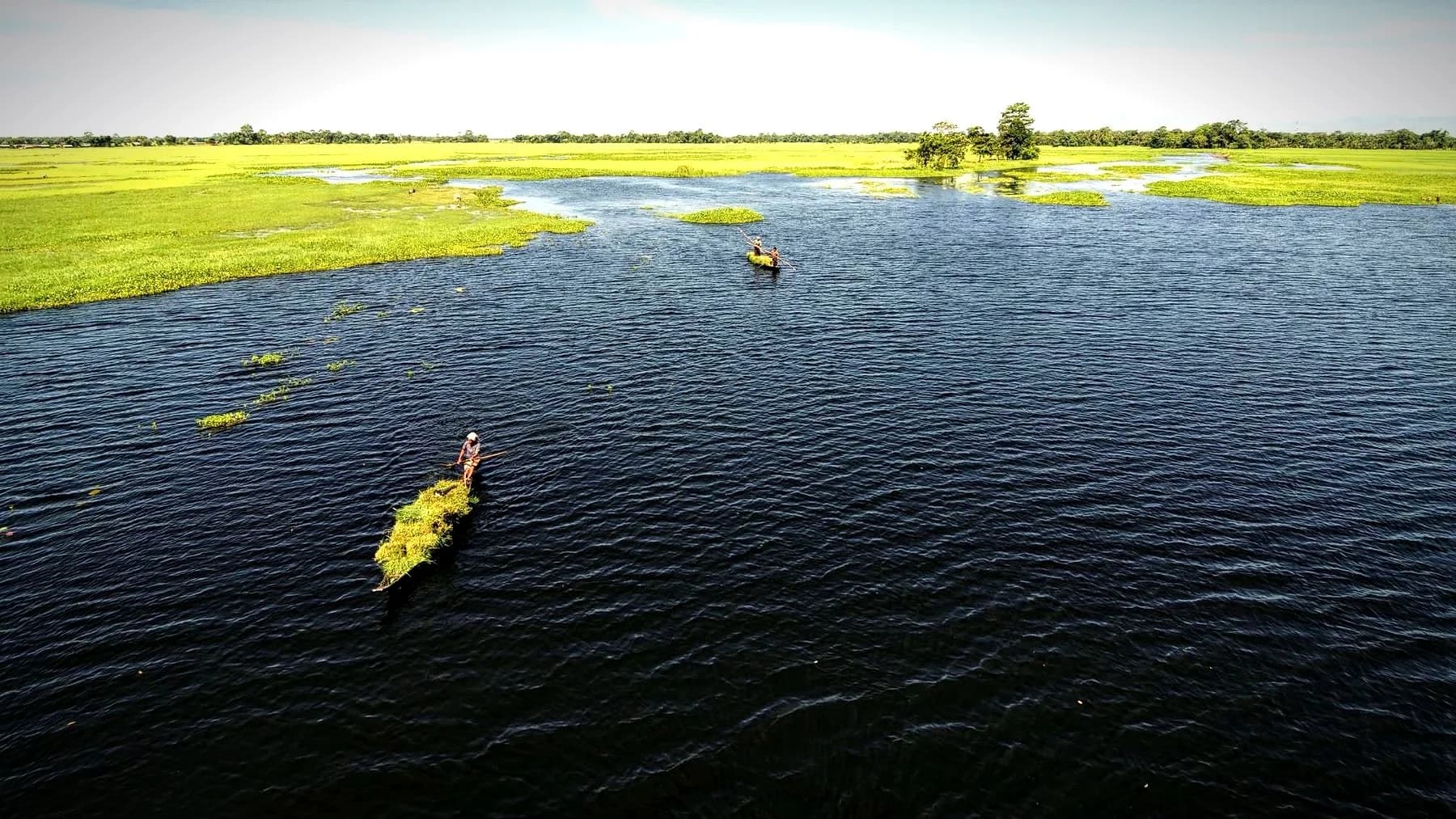
Boatmen poling loaded canoes across a broad channel of the Brahmaputra, Assam
All four states

The river and the grassland

Assam

Boatmen on a Brahmaputra channel near Majuli, Assam

Season
November – April, while the park is open
Permits
None required
Highest point
116 m
Places in this guide
10

The river and the grassland

Assam is the valley the whole region drains into. The Brahmaputra runs its length, braided and several kilometres wide in places, and everything organises around it — the tea gardens on the terraces above the flood line, the river islands, and the wet grassland that makes the state's wildlife possible.

That grassland is the reason Kaziranga holds roughly two-thirds of the world's greater one-horned rhino, along with wild buffalo, swamp deer and a tiger density as high as any protected area anywhere. It is also why the park shuts for five months a year: the monsoon puts much of it under water, and the animals move to higher ground.

The other Assam is the older one — the Ahom kingdom that held this valley for six hundred years and kept the Mughals out of it seventeen times, leaving the tanks and temples around Sivasagar. And Majuli, where the neo-Vaishnavite satras have been centres of dance, mask-making and manuscript for five centuries, on an island the river is steadily taking back.

The main stops

Where most journeys go

These are the places that carry a first visit. Well known for good reason, and every one of them worth the time.

01

Kaziranga National Park

Golaghat & Nagaon · 80 m

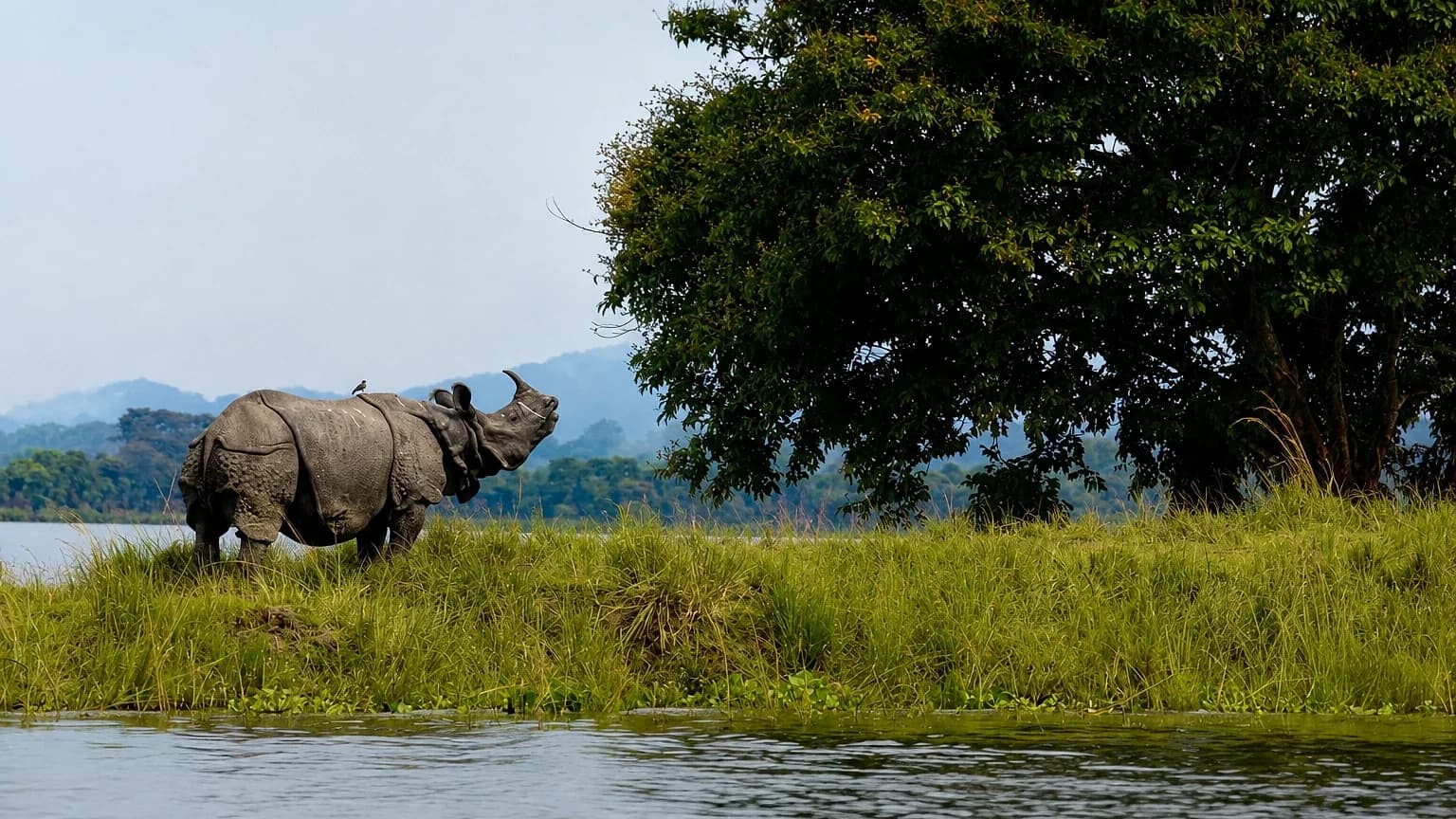
A World Heritage site holding roughly two-thirds of the world's greater one-horned rhino, along with wild buffalo, swamp deer and one of the densest tiger populations anywhere. The park splits into ranges — Central, Western, Eastern — and each drives differently, which is why one safari is never enough.

Best for
Rhino, jeep and elephant safari, grassland
When
November to April; closed through the monsoon
A one-horned rhino standing in the grass at the water's edge in Kaziranga, forested hills beyond
A one-horned rhino at the water's edge
02

Majuli

Brahmaputra, off Jorhat · 85 m

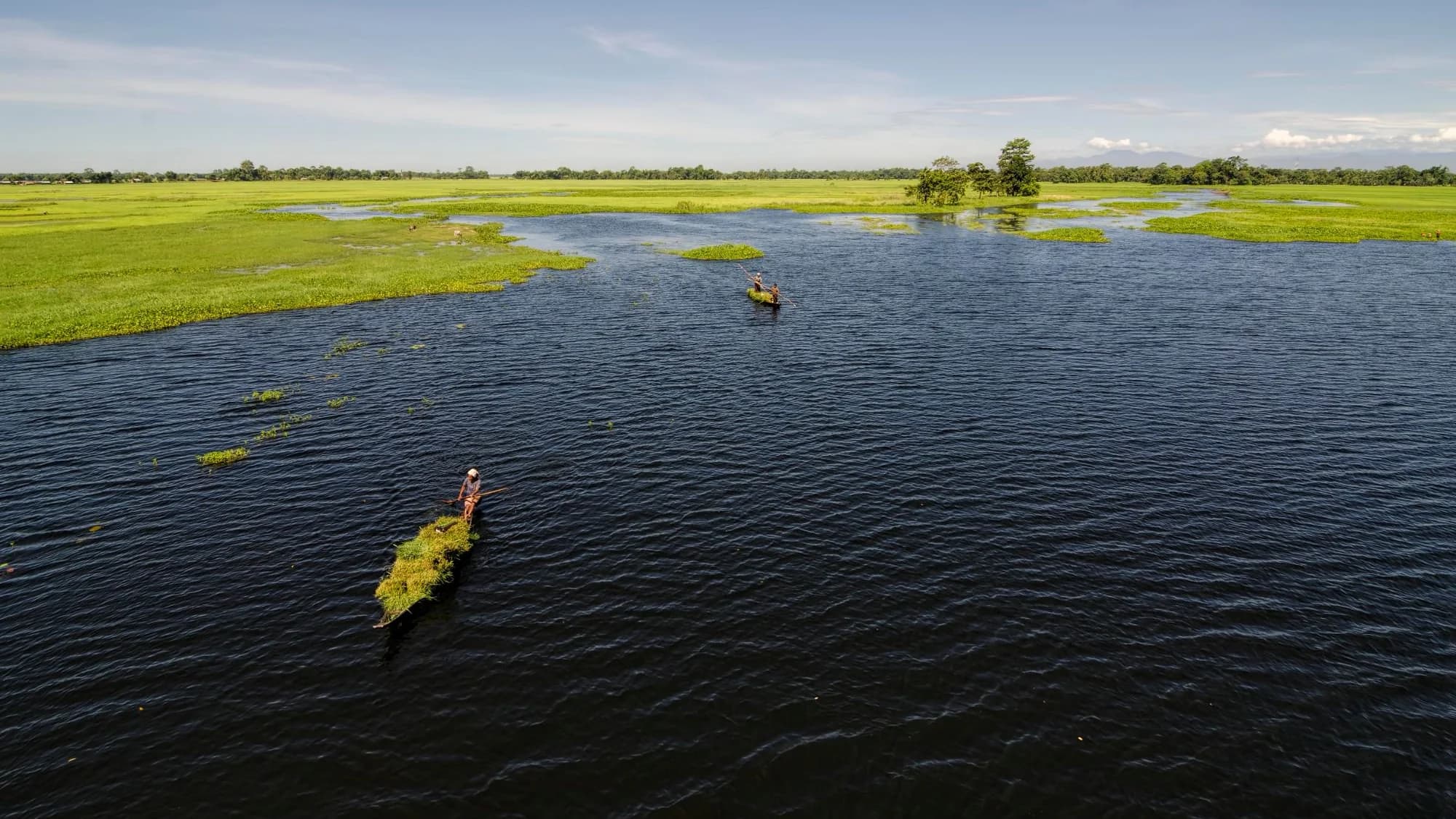
One of the largest river islands in the world, reached by ferry from Nimati Ghat and shrinking each year to erosion. Its satras are monastic centres of the neo-Vaishnavite tradition — Samaguri still makes the painted masks used in their dance dramas.

Best for
Satras, mask making, Mishing villages, cycling
When
November to March
Two poled boats on a wide Brahmaputra channel at Majuli, flat green fields running to the horizon
Poling across the channel at Majuli
03

Guwahati

Kamrup · 55 m

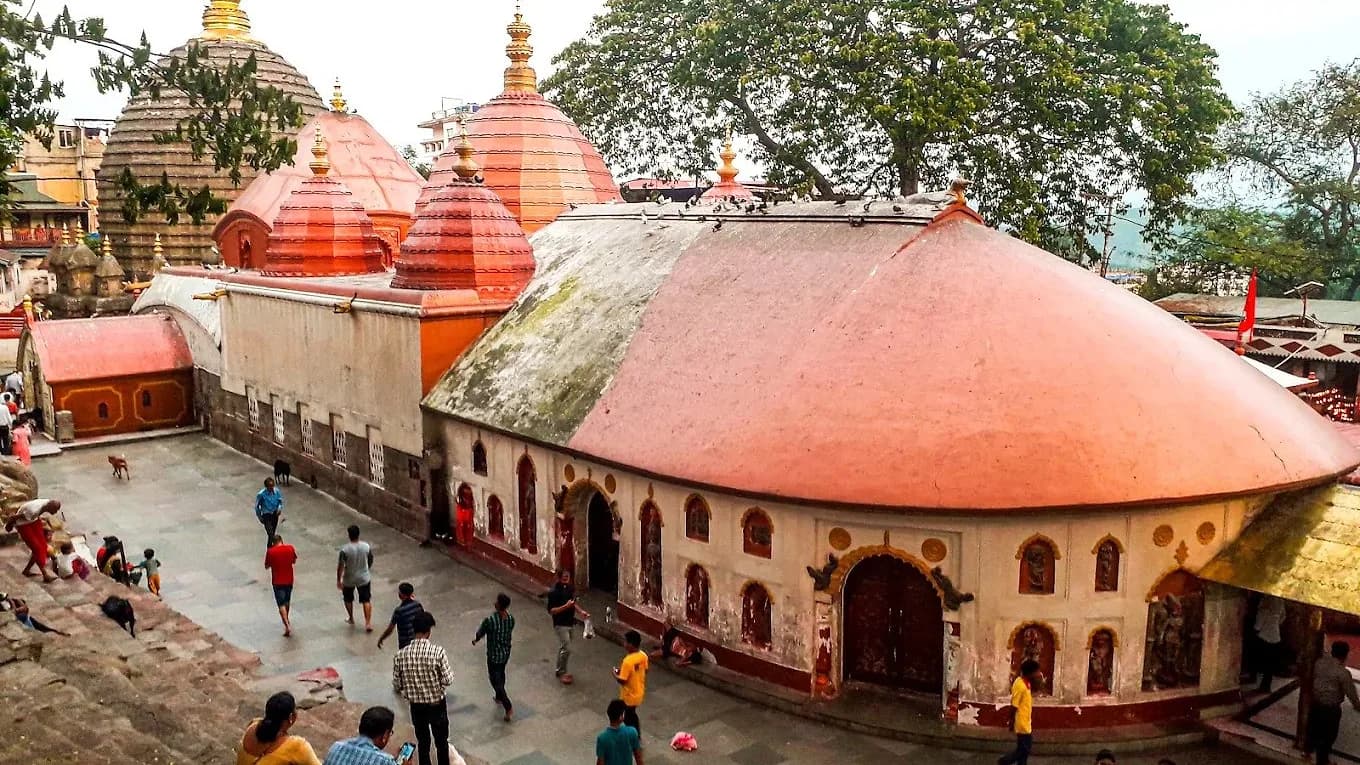
The gateway to the whole region and worth a day of its own. Kamakhya sits on Nilachal hill above the city, one of the most important Shakta temples in India; Umananda occupies a small island in the Brahmaputra reached by ferry.

Best for
Kamakhya, a river cruise, arriving and departing
When
October to April
The red domes and courtyard of the Kamakhya temple in Guwahati, with people crossing the flagstones
The Kamakhya temple courtyard, Guwahati
04

Sivasagar

Sivasagar district · 97 m

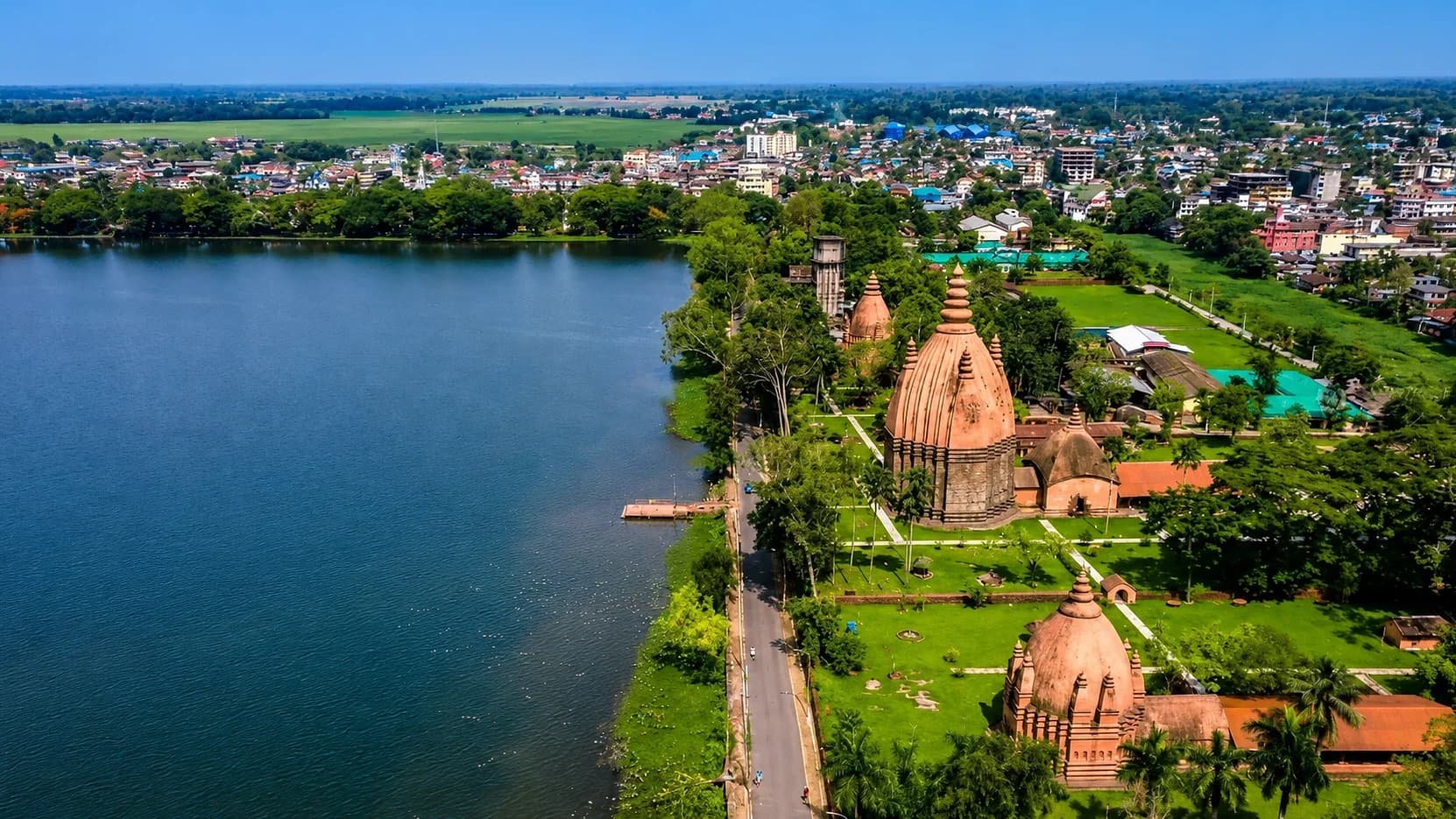
Capital of the Ahom kingdom, which held this valley for six centuries and kept the Mughals out of it. Rang Ghar is one of Asia's oldest surviving amphitheatres; Talatal Ghar runs several storeys below ground as well as above.

Best for
Ahom architecture, tanks and temples
When
October to March
The great tank at Sivasagar seen from the air, its Ahom temple spires standing in gardens along the bank
The tank and its temple spires, Sivasagar
05

Jorhat & the tea estates

Jorhat · 116 m

The centre of Assam's tea industry and the jumping-off point for Majuli. Several estates keep colonial-era bungalows that take guests, where the day still runs to the rhythm of the plucking and the tasting room.

Best for
Estate stays, tea tasting, the Majuli ferry
When
October to April
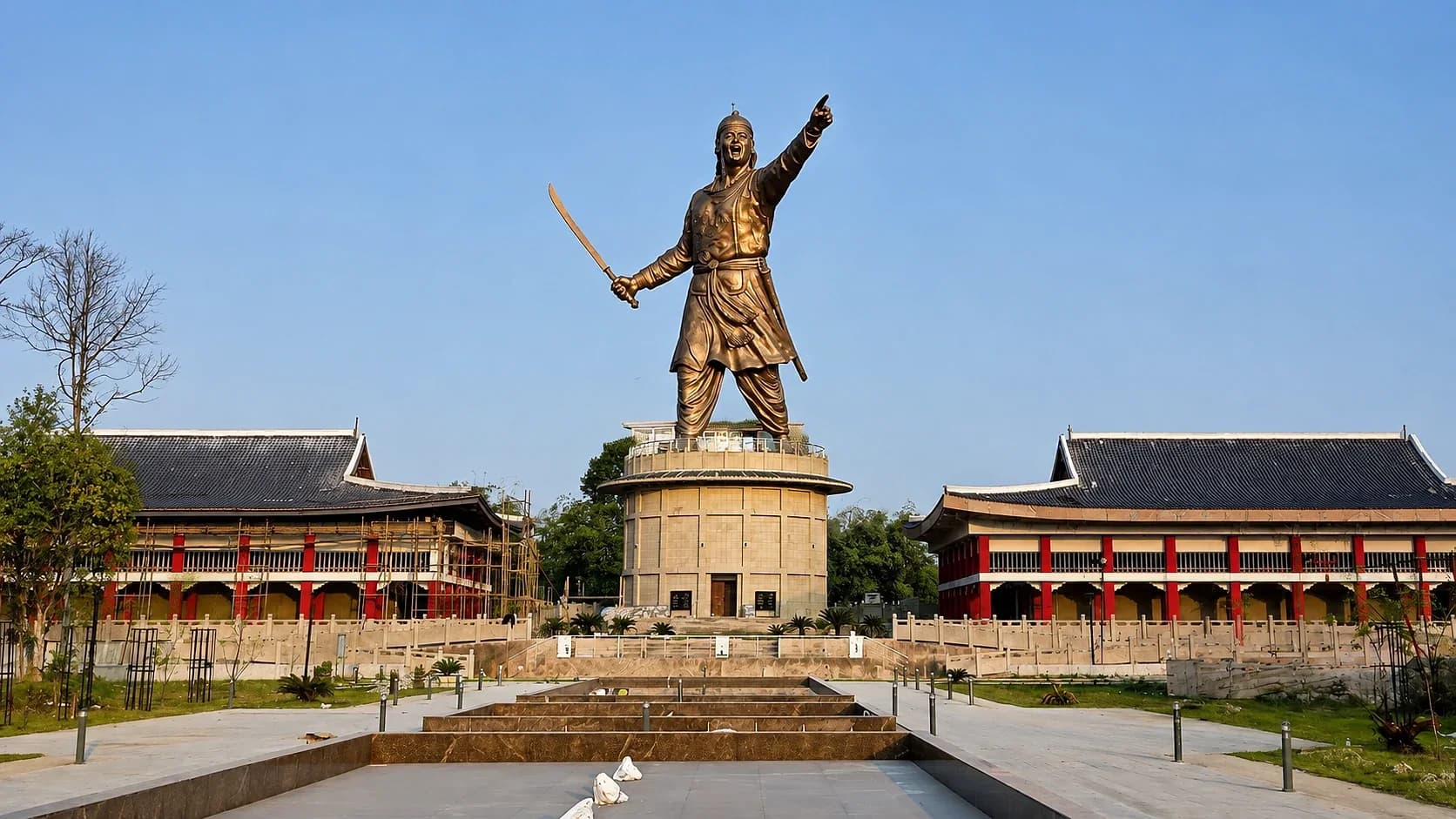
A tall bronze statue of a sword-bearing Ahom general on a round plinth, Ahom-roofed halls on either side
The Lachit Barphukan statue at Jorhat

Further out

The places most itineraries skip

Longer drives, rougher road, fewer beds — and the reason people come back a second time.

01

Manas National Park

Bodoland, on the Bhutan border · 85 m

A World Heritage site and tiger reserve that runs up to the Bhutan foothills, holding golden langur and pygmy hog found almost nowhere else. It was on the danger list through the insurgency years and has recovered quietly, which is why it stays empty compared with Kaziranga.

Best for
Wildlife without crowds, the Bhutan foothills
When
November to April
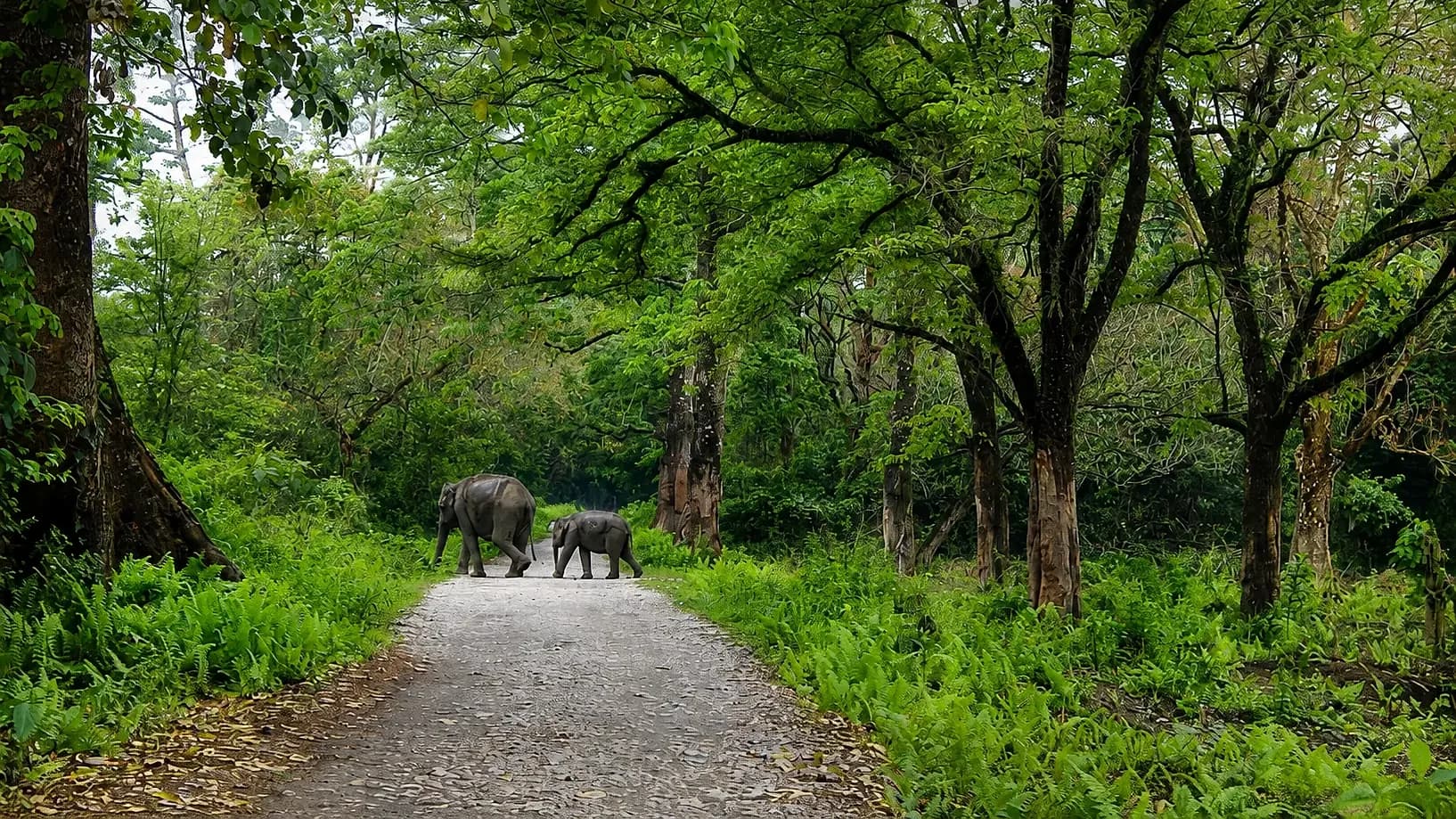
An elephant and its calf crossing a forest track at Manas, dense green closing over the road
An elephant and calf crossing the track
02

Nameri

Sonitpur, at the Arunachal boundary · 80 m

A tiger reserve better known for birds — the white-winged wood duck breeds here — and for rafting the Jia Bhoroli. It pairs naturally with a Tawang route, since the road north to Bhalukpong runs past the gate.

Best for
Birding, river rafting, walking safaris
When
November to April
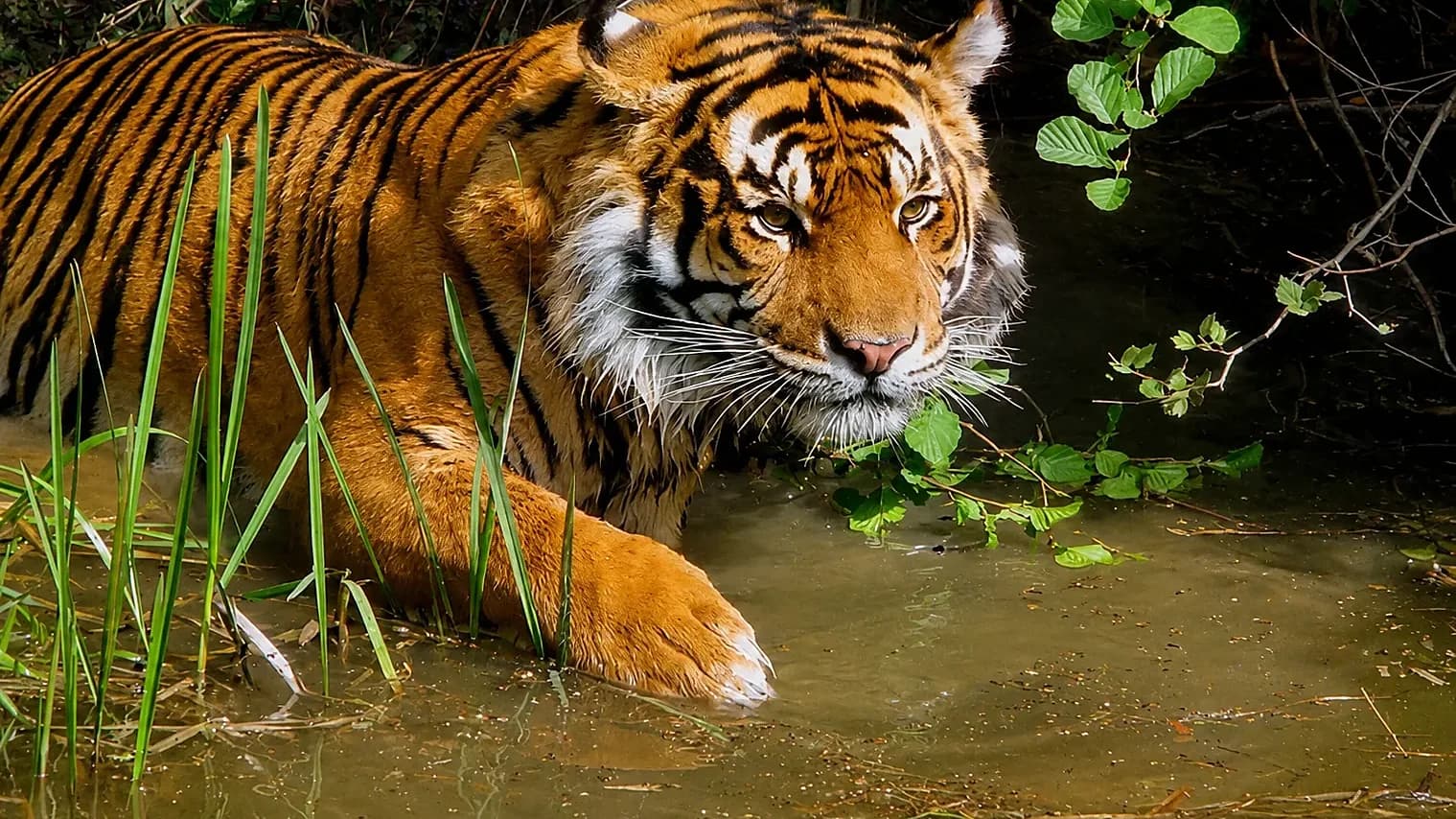
A tiger crouched at the edge of a forest pool, one paw in the shallows
A tiger at the water's edge
03

Dibru-Saikhowa

Tinsukia · 110 m

A biosphere reserve of wet grassland and semi-evergreen forest between two rivers, known for its herd of feral horses left behind after the Second World War. Boat is the sensible way in, and the birding through winter is exceptional.

Best for
Feral horses, winter birds, boat safaris
When
November to March
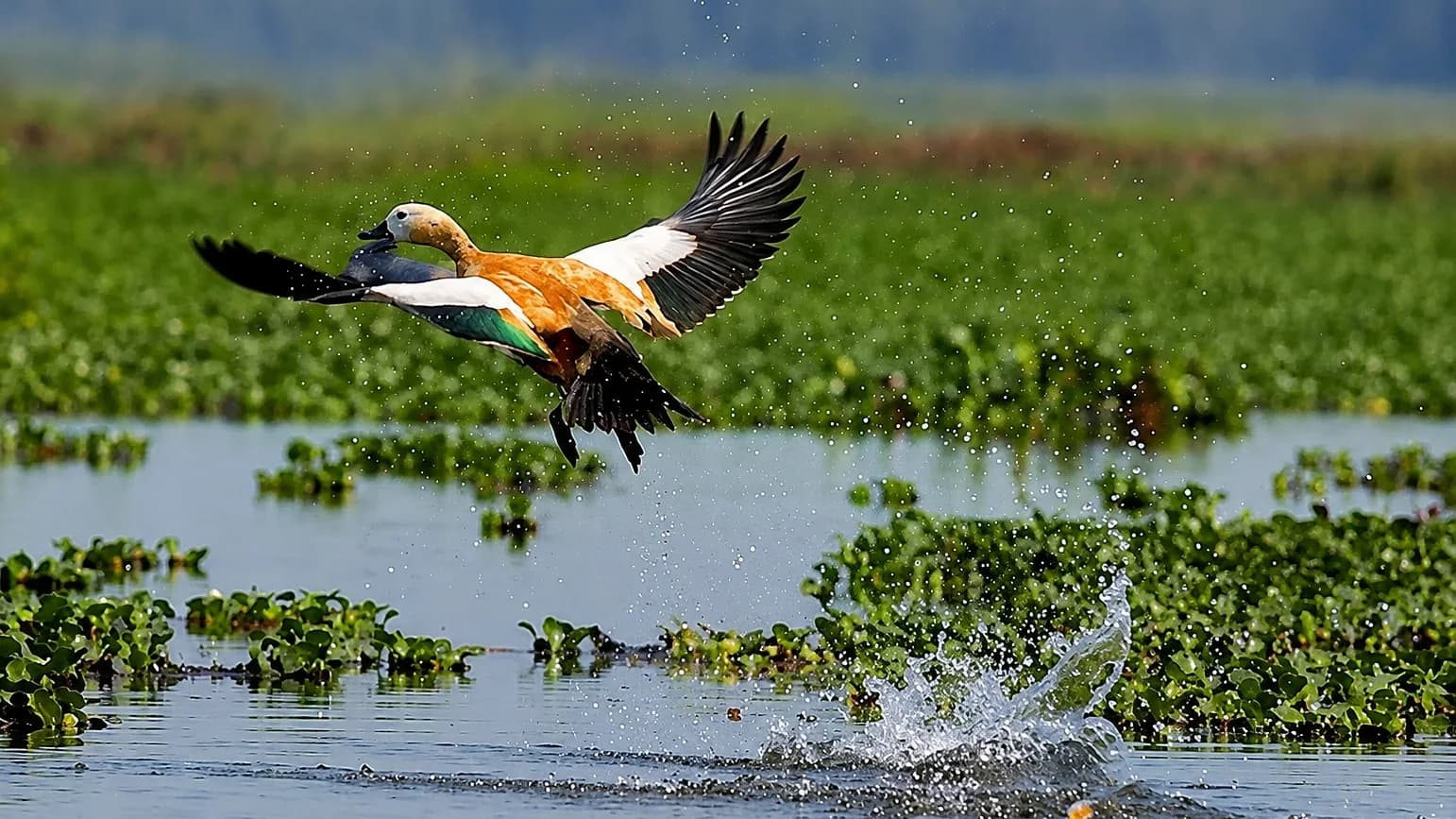
A ruddy shelduck lifting off a weed-covered channel, water breaking behind it
A ruddy shelduck off the water
04

Haflong

Dima Hasao · 680 m

The only hill station in Assam, in the Dima Hasao hills where the narrow-gauge line used to run. Jatinga, on the ridge nearby, is known for the disorienting behaviour of birds on foggy late-monsoon nights, a phenomenon still not fully explained.

Best for
Hill air, Jatinga, Haflong Lake
When
October to March
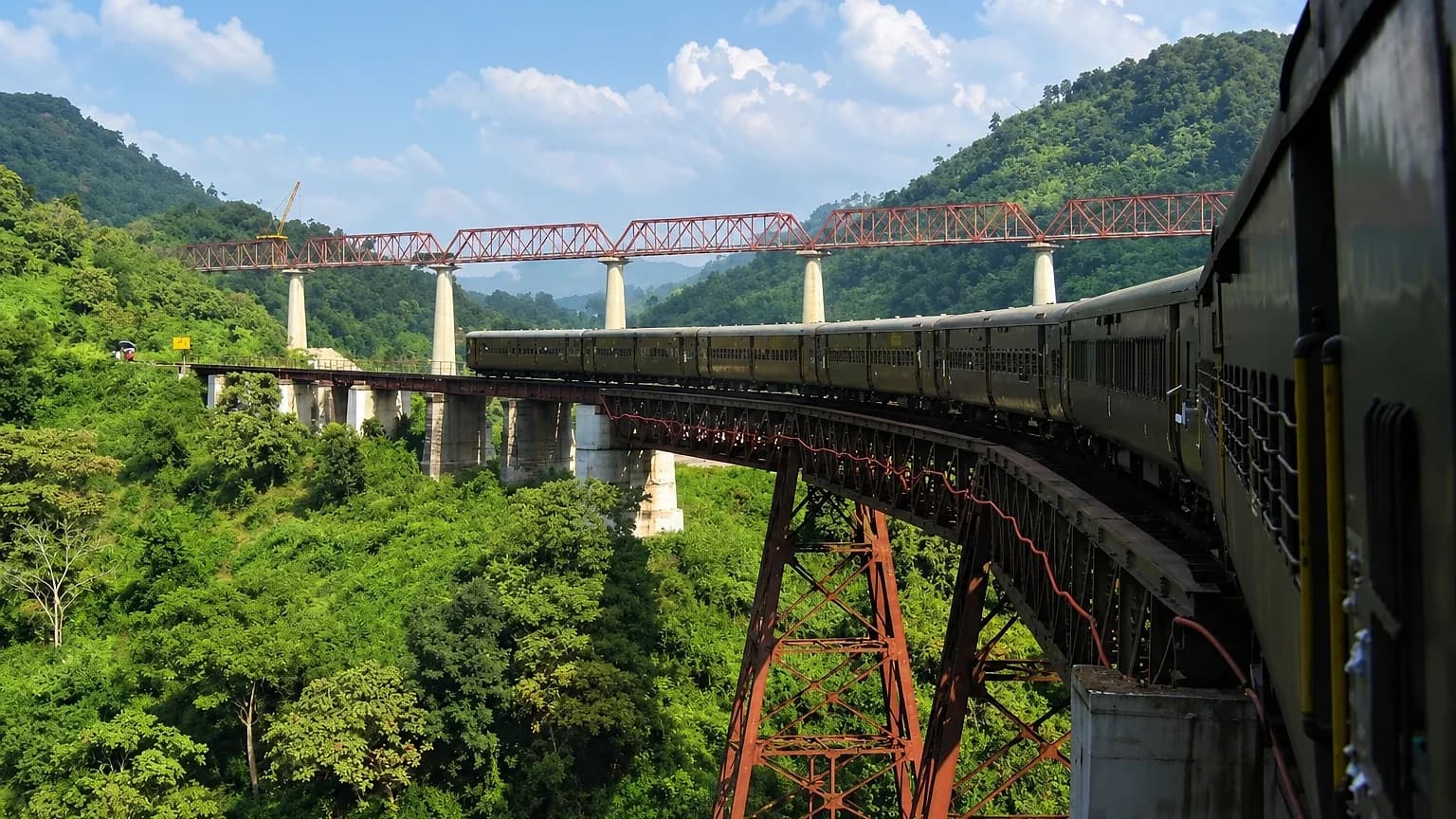
A train crossing a high steel bridge through forested hills on the Haflong line
The hill line, crossing the gorge
05

Sualkuchi

Kamrup, on the Brahmaputra · 50 m

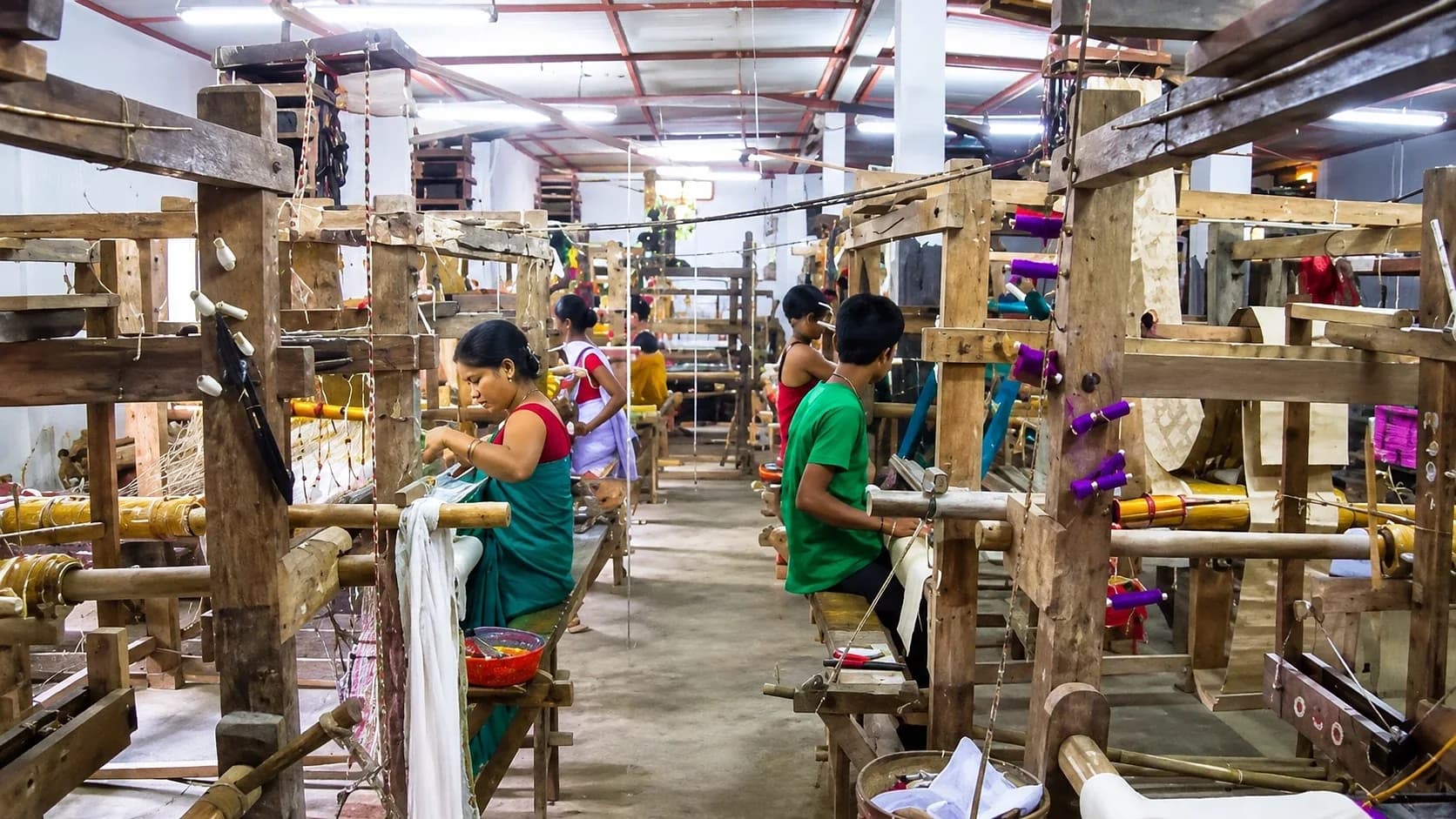
A weaving town where a large part of the population works a loom, producing the golden muga silk that grows nowhere else in the world. Workshops are open to visitors and the difference between mill cloth and handloom becomes obvious within a minute.

Best for
Muga silk, handloom workshops
When
October to April
Weavers at wooden handlooms in a long workshop at Sualkuchi, spools of coloured silk above them
At the looms in Sualkuchi

Start here

Building something around Assam?